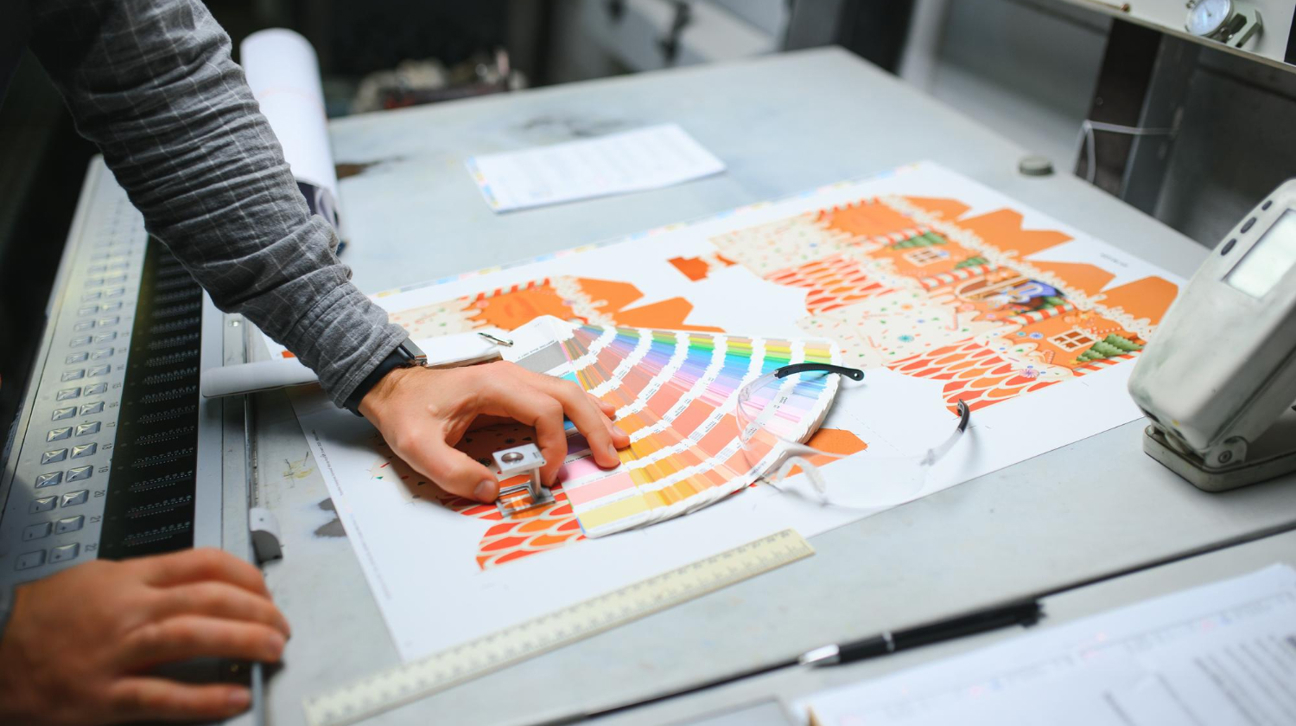
In the world of printing, colour management is a critical process that ensures consistent and accurate colour reproduction across various devices and materials. Whether you are producing marketing materials, packaging, or high-quality publications, understanding colour management is essential for achieving the desired results. This article will explore the fundamentals of colour management in printing, its importance, and how it can enhance the quality of printed materials.
Colour management refers to the systematic approach to controlling and maintaining colour accuracy throughout the printing process. It involves the use of various tools, techniques, and standards to ensure that colours appear the same regardless of the device or medium being used, whether it's a computer monitor, digital printer, or offset press.
The Colour Management Workflow
Calibration: The first step in colour management is calibrating your devices. This involves adjusting printers, monitors, and scanners to ensure they accurately reproduce colours. Calibration helps to eliminate discrepancies caused by variations in technology, ensuring that devices display and print colours consistently.
Profiling: Once devices are calibrated, the next step is to create or use colour profiles. A colour profile is a set of data that describes how a particular device reproduces colour. These profiles help ensure that colours are interpreted correctly across different devices, allowing for consistent output.
Conversion: When moving from one device to another, colour conversion may be necessary. This process involves translating colours from one colour space (like RGB) to another (like CMYK) to ensure accurate reproduction. This step is crucial in printing, as different devices often operate in different colour spaces.
Proofing: Before finalizing a print job, it’s essential to create a proof — a sample print that serves as a preview of the final product. This allows for adjustments to be made to ensure that the printed colours match the intended design. Digital proofing systems, such as soft proofs on monitors or hard proofs on printers, are commonly used in this stage.
Production: Finally, once all adjustments are made, the production process begins. During printing, colour management ensures that the output remains consistent throughout the entire run, regardless of the number of copies being produced.
Consistency Across Print Runs: Colour management ensures that colours remain consistent across different print jobs. This is vital for maintaining brand integrity, especially for businesses that require uniformity in their marketing materials.
Accurate Colour Reproduction: With effective colour management, businesses can accurately reproduce their intended colours, whether in packaging, brochures, or any other printed material. This accuracy is crucial for brand identity and customer satisfaction.
Efficiency and Cost-Effectiveness: By reducing the need for reprints due to colour mismatches, colour management can save businesses time and money. It streamlines the printing process and minimizes waste, contributing to more efficient operations.
Enhanced Quality Control: Colour management provides a framework for quality control throughout the printing process. It allows for systematic checks and adjustments, ensuring that the final product meets or exceeds expectations.
Improved Collaboration: In a collaborative environment where designers and printers work together, colour management creates a common language. It helps ensure that everyone involved in the project has a clear understanding of colour expectations and standards.
Colour management is a vital component of the printing process that affects the quality, consistency, and accuracy of printed materials. By understanding and implementing effective colour management practices, businesses can enhance their brand image, improve customer satisfaction, and achieve better overall results.
In an industry where first impressions matter, investing in colour management is essential for any organization looking to produce high-quality printed materials that reflect their vision and values. Whether you are a designer, printer, or marketer, mastering colour management will empower you to achieve stunning results in your print projects.